University Research Clubs Expand Their National Collaboration
Fourteen public and private university societies sign an open data-sharing charter to co-author undergraduate policy briefs and pool fieldwork logistics across six divisions.
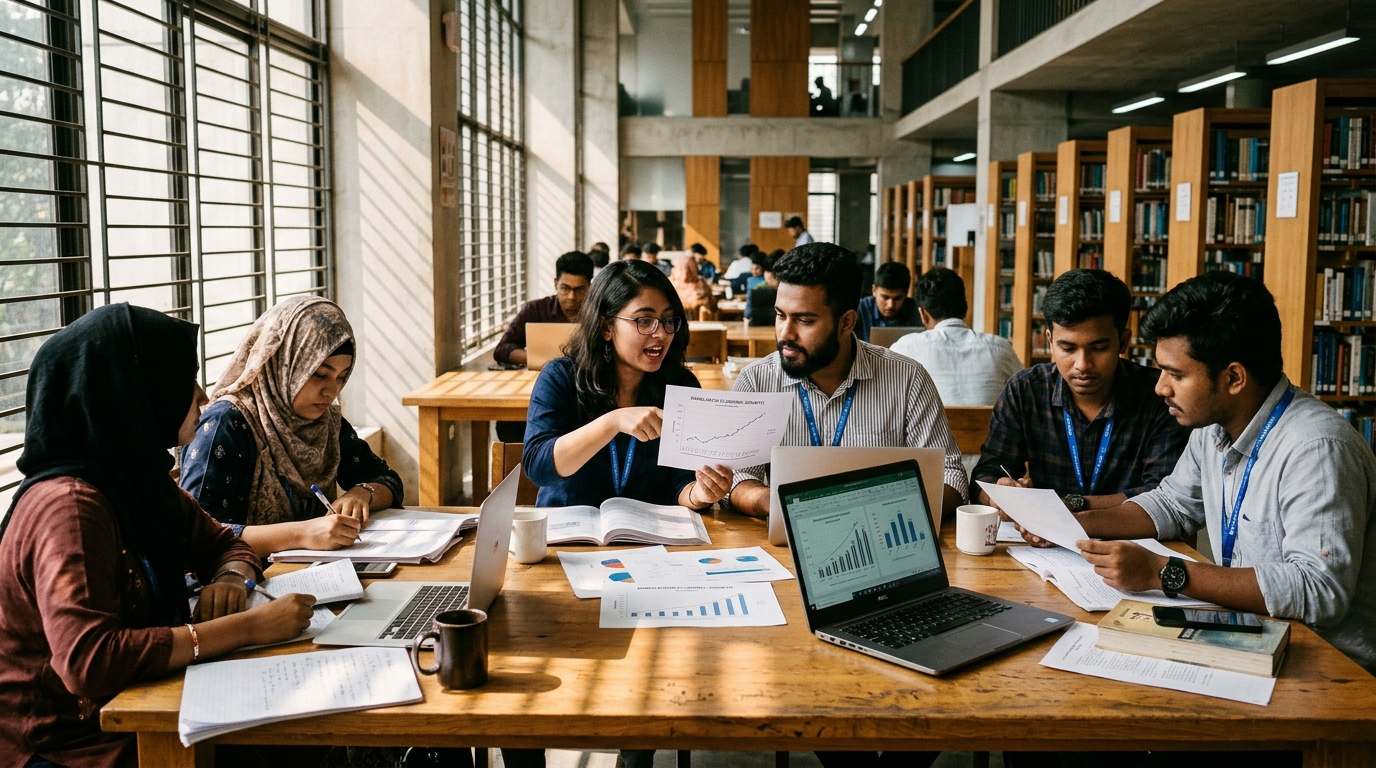
DHAKA — For nearly a decade, student research societies across Bangladesh operated largely inside their own campus gates—hosting separate case competitions, publishing small-run journals, and struggling individually to secure faculty reviewers or primary field datasets. This month, fourteen university research clubs moved to alter that trajectory by signing the Inter-University Research Exchange Charter in Dhaka.
Coordinated with advisory support from the Centre for Fintech and Strategic Business Research (CFSBR) and hosted at the University of Dhaka, the alliance establishes a common peer-review pipeline, standardized survey ethics templates, and a shared archive where undergraduate working papers remain publicly accessible long after a student cohort graduates.
From Isolated Symposiums to Shared Fieldwork
Under the new protocol, member clubs in Sylhet, Khulna, Rajshahi, and Chattogram will co-collect regional household and SME price data using harmonized questionnaires. Previously, a Dhaka-based finance club examining mobile merchant adoption had little reliable visibility into district markets outside the capital.
“When fourteen campuses share one methodological playbook, student inquiry stops being a rehearsal and begins contributing verifiable evidence to public conversation.”
Participating clubs have committed to publishing at least two cross-campus empirical briefs per semester, covering micro-enterprise credit friction, urban transit affordability, coastal salinity adaptation, and youth digital literacy. Each brief undergoes double-blind screening by faculty mentors and industry practitioners before release.
Addressing the Continuity Gap
Organizers emphasized that the greatest obstacle facing campus societies has rarely been enthusiasm—it has been institutional memory. Executive committees rotate every twelve months, frequently leaving promising survey datasets stranded on personal drives.
- Open repository indexing all student datasets with DOI-ready citation records and methodology notes.
- Quarterly regional workshops pairing economics, engineering, and environmental science societies.
- Transparent funding disclosures for corporate-sponsored research competitions and field stipends.
The coalition plans to release its inaugural joint report on informal retail payment adoption across twelve district towns in February, alongside a public directory enabling journalists and policymakers to contact campus research leads directly.
ABOUT THE REPORTER
Farhana Rahman
Higher Education & Campus Correspondent
Covers university research networks, student societies, and education policy from Dhaka.
Related Dispatches
More in Campusবিশ্ববিদ্যালয় গবেষণা ক্লাবগুলোর যৌথ ডেটা ও প্রকাশনা নেটওয়ার্ক চালু
বিচ্ছিন্ন সেমিনার ও বার্ষিক প্রতিযোগিতার বাইরে এসে আন্তঃবিশ্ববিদ্যালয় যৌথ গবেষণা ও উন্মুক্ত আর্কাইভ গড়ে তুলতে নতুন উদ্যোগ নিয়েছে শিক্ষার্থী সংগঠনগুলো।
Universities Pilot Shared Open-Access Thesis Indexing Portal
The pilot aims to curb duplicate research topics and elevate original Bangladesh-focused scholarship in global academic search indexes.
Instant Merchant Settlement Pilots Reshape Dhaka SME Liquidity
Commercial banks and mobile financial service providers are testing real-time clearing rails aimed at drawing cash-heavy wholesale markets into formal ledger histories.